Hotels near Montmartre, Paris, France
Showing 3 hotels
- 1 of 12
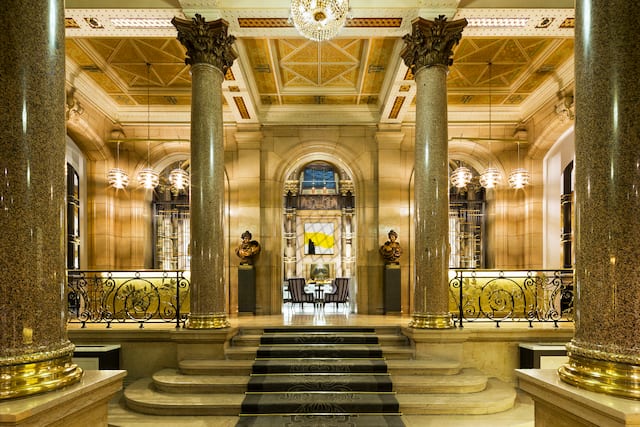
Hilton Paris Opera
1.11 miles - 1 of 12
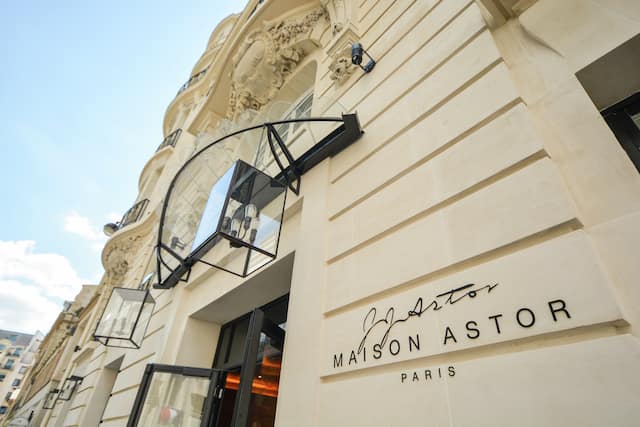
Maison Astor Paris, Curio Collection by Hilton
1.44 miles - 1 of 10
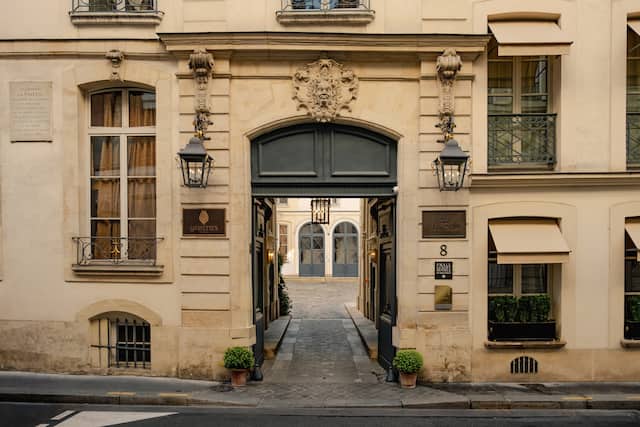
Marquis Faubourg Saint Honore, an SLH Hotel
1.54 miles






Why did artists flock to Montmartre in the late 19th century?
In the late 19th and early 20th centuries, Montmartre was on the outskirts of Paris and attracted struggling artists seeking affordable rents, freedom, and creativity. Known for the bohemian lifestyle, vibrant café culture, and diverse population, it encouraged experimentation in style and subject matter, which was in stark contrast to the confines of the École des Beaux-Arts and the traditions and institutions of academic art.
Cabarets such as Le Chat Noir and the Moulin Rouge reinforced the notion of an artistic culture resonating in Montmartre. Eventually, artists gravitated there to draw inspiration from its steep streets, open skies, and panoramic views of the city.
Montmartre was so much more than a location, it was a living, breathing creative outlet that propelled and redefined the direction of modern art as we know it, both on a national level and worldwide.
Which famous painters lived in Montmartre?
Montmartre was home to many of the most important painters of the 19th and early 20th centuries, including Pablo Picasso, who lived and worked there during the early years of his career. Henri de Toulouse-Lautrec created some of his famous posters capturing the vibrant nightlife of the Moulin Rouge while in Montmartre.
While living here, Pierre-Auguste Renoir painted The Swing and Bal du moulin de la Galette, celebrating local scenes. Many other notable figures, including Amedeo Modigliani, Suzanne Valadon, and her son Maurice Utrillo, contributed to carrying on the artistic legacy of the area.
Montmartre fostered a unique artistic community that evoked new ideas of experimentation while defining Paris as a true melting pot of talent and innovation.
Are there windmills still standing in Montmartre?
Yes, Montmartre still has two remaining windmills: Le Moulin de la Galette and Le Moulin Radet. They were built in the 17th and 18th centuries and represent the rural history of Montmartre when the area was used as farmland and covered in vineyards.
The windmills are enduring culture-bearing symbols with significance to the evolution of the area, with Le Moulin de la Galette growing famous through paintings by artists like Renoir and Van Gogh. Le Moulin Radet is now part of a private restaurant, while Le Moulin de la Galette sits above the same-named bistro.
Their presence connects visitors to a time when Montmartre was more village than city, adding charm and historical depth to an otherwise urban landscape.
What is the story behind the Sacré-Cœur Basilica in Montmartre?
The Sacré-Cœur Basilica was built to symbolize national penitence and spiritual renewal in France after the country's defeat in the Franco-Prussian War and the chaos of the Paris Commune. Construction of the church began in 1875 and took decades to finish, with the basilica officially completed in 1914 but consecrated in 1919 following World War I.
It is located on Montmartre Hill, the highest point in Paris, and built of gleaming white travertine stone that shines brightly against the skyline.
Designed in a Roman-Byzantine style, the basilica's massive dome, striking interiors, and panoramic views of Paris draw millions of visitors each year, seeking to experience its refined combination of architectural beauty and religious importance.
Are there hidden vineyards in Montmartre?
Yes, it is home to a small, historic vineyard known as Le Clos Montmartre, nestled near the Rue des Saules and the Lapin Agile cabaret. This vineyard, now maintained by the city of Paris, is a hidden gem in the heart of the capital, offering rare insight into Montmartre's rustic, agricultural past. Approximately 1,500 square meters in size, it was replanted in 1933 as part of a city-led initiative to preserve Montmartre's heritage.
It produces a modest yield of wine each year, mostly used for ceremonial or local charity purposes. Each year in October, the Fête des Vendanges (Harvest Festival) is celebrated at Montmartre with music, parades, and tastings.
While not generally accessible to the public, the vineyard can be viewed from surrounding streets and during special events. Its presence adds distinctive charm and a sense of historical continuity to a neighborhood mostly known for its art and nightlife.
*Prices are based on current availability over the next 30 days and are subject to change. Please enter exact dates for specific pricing and availability.