Hotels near Nymphenburg Palace, Munich, Germany
Showing 4 hotels
- 1 of 12
- 1 of 12
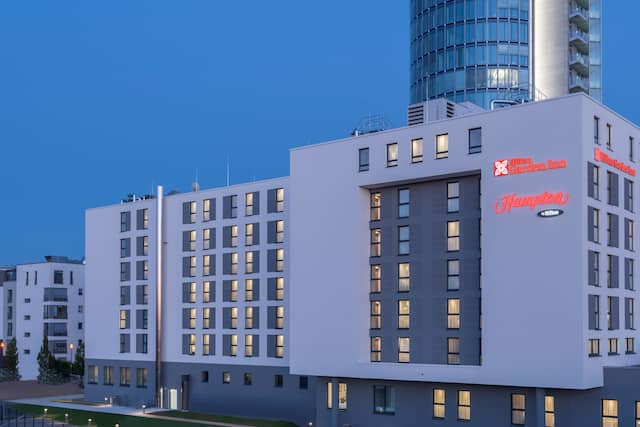
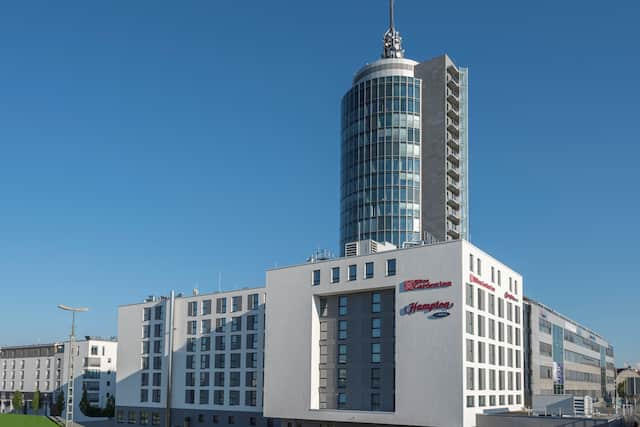
Hilton Garden Inn Munich City West
1.91 milesFrom*
93€
Honors Discount Advance Purchase
- 1 of 9

House of Hutter - Munchner Kindl, an SLH Hotel
3.35 milesSold Out
Check Available Dates
- 1 of 12

Hilton Munich City
4.55 milesFrom*
136€
The Hilton Sale Honors


Why was Nymphenburg Palace built?
Commissioned by Elector Ferdinand Maria and his wife Henriette Adelaide of Savoy to celebrate the birth of their male heir, Maximilian II Emanuel, Nymphenburg Palace was built in the 17th century as a summer residence for the rulers of Bavaria. Over time, as successive rulers expanded the original Baroque structure into a vast complex to convey their royal stature and political influence, it came to symbolize the power and legacy of the Wittelsbach dynasty, one of Europe's oldest royal lineages.
Chosen for its peaceful surroundings, the site allowed for the creation of extensive gardens and hunting grounds. During warmer months, Nymphenburg Palace became a center for royal family life, providing an escape from the administrative responsibilities of Munich’s city center.
Today, Nymphenburg Palace, with its various wings and pavilions built over generations, showcases the evolving architectural styles and provides a glimpse into the private lives, political ambitions, and struggles of Bavarian rulers, making it a pivotal cultural landmark.
What is unique about the gardens at Nymphenburg Palace?
The gardens at Nymphenburg Palace are famous for their mix of Baroque and English landscaping styles that allow visitors to see how design influences evolved over the years. Originally built as a formal Baroque garden in the early 18th century, complete with symmetrical paths, fountains, and well-trimmed hedges, more naturalistic landscapes following the English garden movement, including winding paths, water features, and wooded areas, were introduced in the 19th century to parts of the grounds.
The gardens are also home to multiple pavilions, including the Amalienburg, a rococo-style hunting lodge, and the Pagodenburg, known for its exotic design.
By combining structured terraces with relaxed wooded areas in a continuous landscape, the gardens at Nymphenburg Palace offer a rich visual experience.
Which famous historical figures lived at Nymphenburg Palace?
Nymphenburg Palace was home to some of the most notable figures in Bavarian and European history, particularly the Wittelsbach dynasty. King Ludwig II of Bavaria, best known for commissioning Neuschwanstein Castle and his support of composer Richard Wagner, is among its most famous residents.
Other famous residents were Elector Max Emanuel, a prominent 17th-century ruler and military leader, and Charles Theodore, Elector of Bavaria in the late 18th century. Many generations of Bavarian monarchs used the palace as a ceremonial seat and favored it as a retreat because of its more relaxed setting compared to the Residenz in central Munich.
The royal presence at Nymphenburg Palace helped establish it as a center of cultural and political power in the region.
Can visitors see the carriage museum at Nymphenburg Palace?
Yes, the carriage museum, located within the former stables of Nymphenburg Palace, is open for visitors. It is part of the palace complex and accessible wtih a general admission or combination ticket.
Officially known as the Marstallmuseum, it has an extensive collection showcasing several centuries of royal carriages, sleighs, harnesses, and riding gear used by the Bavarian court. Some of the more interesting objects include King Ludwig II's opulent coronation coach, decorated in velvet and gold, and ceremonial sleighs, which captivate with their intricate craftsmanship and pageantry.
The exhibits reveal the transportation styles of Bavarian nobility and the characteristic opulence of royal travel. All objects are accompanied by information panels, providing historical context to complement the experience.
Are there special events held at Nymphenburg Palace?
Yes, special events are organized at Nymphenburg Palace throughout the year, many of which highlight the lavish interiors and landscaped gardens. Classical concerts are the most common and typically staged in the Stone Hall for its remarkable acoustics and exceptional decoration, which enrich the experience.
Events range from chamber music and piano recitals to seasonal performances related to local festivals. While outdoor spaces host cultural events, art installations, and historical exhibitions, they are rarely used for large-scale events in order to preserve the grounds.
The schedule varies by season, so it is best to visit the official website for information on the latest event programming. Guided tours, temporary exhibitions, and educational workshops offer additional alternatives to engage with the palace beyond traditional sightseeing.
*Prices are based on current availability over the next 30 days and are subject to change. Please enter exact dates for specific pricing and availability.