Hotels near Phoenix Park, Dublin, Ireland
Showing 9 hotels
- 1 of 12

- 1 of 12
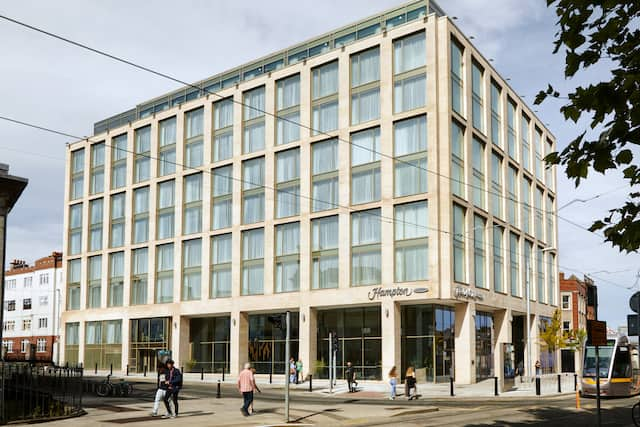
Hampton by Hilton Dublin City Centre
2.44 milesFrom*
148€
The Hilton Sale Honors
Free breakfast - 1 of 12

The Morrison Dublin, Curio Collection by Hilton
2.71 milesFrom*
245€
Honors Discount
- 1 of 12

Home2 Suites by Hilton Dublin City Centre
2.90 milesFrom*
152€
The Hilton Sale Honors
Free breakfast - 1 of 11
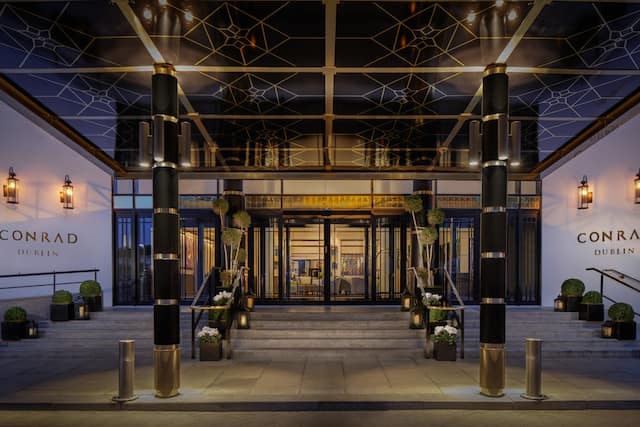
Conrad Dublin
3.31 milesFrom*
360€
The Hilton Sale Honors
- 1 of 12

Hilton Dublin
3.36 milesFrom*
184€
Honors Discount
- 1 of 7

The Wilder Townhouse, an SLH Hotel
3.40 milesFrom*
282€
Honors Discount Advance Purchase
Free parking - 1 of 12
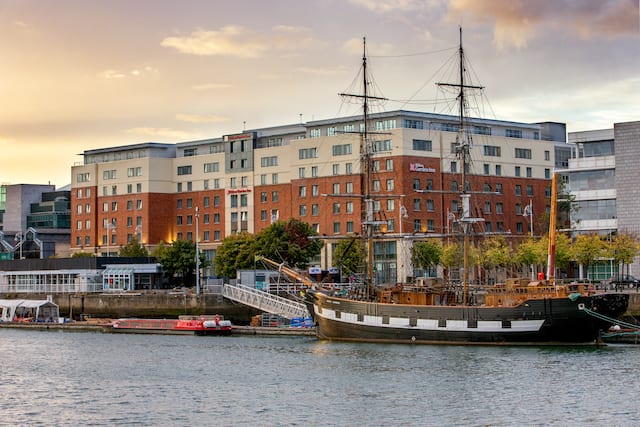
Hilton Garden Inn Dublin City Centre
3.47 milesFrom*
168€
The Hilton Sale Honors
- 1 of 11

Dylan Hotel, Dublin, an SLH Hotel
3.93 milesFrom*
372€
Honors Discount


Why is Phoenix Park one of the largest urban parks in Europe?
Spanning over 1,700 acres (approx. 700 hectares), or more than two times the size of New York’s Central Park, and encircled by an 11-kilometre long wall, the sheer scale of Phoenix Park makes it one of the largest enclosed parks in Europe.
Initially established in 1662 as a royal deer hunting ground for the Duke of Ormonde under King Charles II, it opened to the public in 1747 and continued to serve as a vast space for recreation and various ceremonies. It is a seamless mix of natural beauty with formal landscapes, meadows, woodland, and sweeping avenues.
What's interesting is that it has preserved its original size and form despite the constant urban expansion. Today the park includes multiple playing fields, gardens, monuments and a number of public institutions including the residence of the President of Ireland and the Dublin Zoo.
What kind of deer live in Phoenix Park?
Phoenix Park is home to a herd of wild fallow deer, known for their spotted coats and distinctive palmate antlers in males, which have freely roamed its grounds for hundreds of years. Now a popular attraction amongst visitors, they were originally introduced in the 17th century when the park was used as a royal hunting ground.
Their number fluctuates between 400 and 600, depending on the season and breeding cycles. Even though they are generally calm and most commonly found grazing in the open fields or near wooded areas, it is advised not to approach or feed them, as they are still considered wild animals.
Their continued presence contributes to the park’s natural appeal while preserving its origins and historical identity.
Are there historic buildings inside Phoenix Park?
Yes, Phoenix Park features a number of historic buildings that showcase its connection to Irish history and governance. Áras an Uachtaráin, the official residence of the President of Ireland, which was first constructed in 1751 and remains in use today, is one of the prime examples of this connection. Just 250 meters away is the U.S.
Ambassador’s residence, formerly the Ranger’s Lodge, which serves as another reminder of the park's past. It is also home to the Magazine Fort, a military storehouse dating back to the 18th century, and the Victorian People’s Flower Gardens which boast elaborate landscaping elements.
Last but not least, situated within the Visitor Centre area is Ashtown Castle - a restored medieval tower house, providing insight into earlier periods of settlement. The array of historic buildings further solidifies the social importance of Phoenix Park by adding a layer of cultural and architectural depth to its recreational significance.
Has Phoenix Park hosted major concerts or events?
Yes, Phoenix Park has had a number of large concerts and public events take place on its sprawling open spaces over the years with notable performances from the Red Hot Chili Peppers and Kanye West, in addition to countless festivals and national events. In 1979 Phoenix Park played host to one of the most historically significant events in Ireland when Pope John Paul II held a mass for one million people.
It also regularly welcomes sporting events, charity runs, cultural festivals, and various performances.
These events highlight the park’s unique ability to blend natural tranquility with civic and cultural engagement.
Who designed Phoenix Park’s layout?
While Phoenix Park's origins can be traced back to the 17th century when it was first enclosed, its layout was predominantly established in the 19th century by landscape designer Decimus Burton. Burton was an English architect and planner, who was contracted to enhance the aesthetics and functionality of the park during a period of major redevelopment.
As part of his vision, tree-lined avenues, structured pathways, and sightlines, which emphasised the spatial scale and natural beauty of the park, were added. He created an inviting and accessible green space by combining formal landscaping with open meadows and woodland.
Today, traces of his work are still evident, for example in Chesterfield Avenue, the Park's main avenue, and in the extent of the spatial layout among other aspects.
*Prices are based on current availability over the next 30 days and are subject to change. Please enter exact dates for specific pricing and availability.