Hotels near Temple Bar, Dublin, Ireland
Showing 2 hotels
- 1 of 12
The Morrison Dublin, Curio Collection by Hilton
0.10 miles - 1 of 12
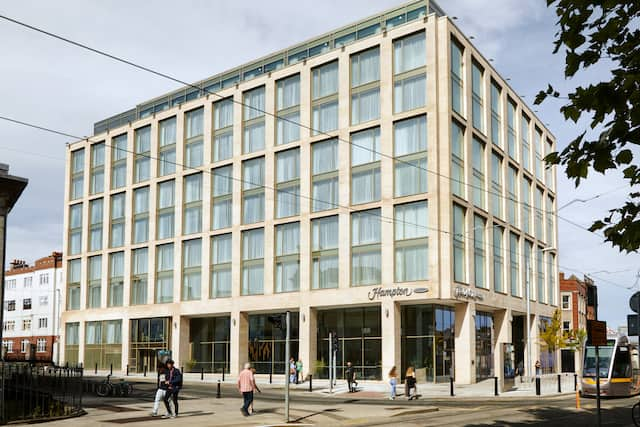
Hampton by Hilton Dublin City Centre
0.33 milesFree breakfast




Why is Temple Bar famous in Dublin?
With its famed nightlife, picturesque cobbled streets and vibrant culture, Temple Bar is undoubtedly one of the best known districts in Dublin. Situated on the south side of the River Liffey, Temple Bar draws in locals and tourists alike who want to experience its bustling street life through its authentic, local pub culture.
Street performers, ranging from buskers to traditional folk bands, add to the area's distinct charm making it feel like a festive place throughout the year. In addition to live performances, Temple Bar is also home to countless cultural institutions, such as art galleries, film centres, theatres and performance venues.
The district blends the historical appeal with urban energy, making it a welcoming place for people of all ages. Whether you are looking for a pint of Guinness, traditional music or to see local art, Temple Bar offers a slice of Dublin's eclectic vibe.
What is the history behind Temple Bar’s cobblestone streets?
The cobbled streets of Temple Bar embody the medieval origins of Dublin while also serving as the urban fabric that transcends its past and gives it contemporary relevance. Temple Bar began developing in the 17th century, as a fashionable neighborhood on the south bank of the River Liffey that offered a mix of residential, commercial, and artisan spaces.
The cobbled paving serves as a direct link to that history, allowing visitors a peek into what it looked and felt like to visit the area back in the day.
Temple Bar even faced possible redevelopment in the 20th century, but the residents' actions in the mid-to-late 1980s revived the area in a way that maintains its historic form, as well as its functions, with the cobbled roads, lanes, and enclaves continuing to play an integral part in the Temple Bar experience.
Are there traditional music performances in Temple Bar?
Live traditional Irish music is an integral part of the renowned social energy of Temple Bar. There is almost always a performance going on at some pub or venue in the area with The Temple Bar Pub and The Auld Dubliner being amongst the most prominent ones.
Traditional instruments like fiddles, bodhráns, and tin whistles are common in these sessions, featuring well-known folk songs and storytelling with frequent audience involvement. Some performances are more spontaneous and informal, with musicians simply gathering and playing together, while others are scheduled and announced well in advance.
During festivals and weekends, the music often fills the air and attracts passersby from nearby streets. Whether you're exploring Temple Bar during the day or at night, there's a strong chance you'll come across a live music performance.
Does Temple Bar have any cultural centres or galleries?
Yes, Temple Bar is home to a number of cultural institutions that go beyond its nightlife reputation. The Temple Bar Gallery + Studios is a visual arts space that showcases temporary exhibitions by Irish and international artists, making it a creative beacon in the visual arts community.
Showcasing independent cinema, Irish-language films, and classics, in addition to offering educational initiatives, the Irish Film Institute (IFI) is also part of Temple Bar's cultural highlights. Project Arts Centre, one of Ireland’s most prominent contemporary arts venues, is where visitors can enjoy theatre, dance, and visual art exhibitions.
These institutions have contributed to Temple Bar's branding as Dublin's "cultural quarter", a title that emerged as part of urban revitalization efforts in the 1990s. This title is further solidified through the numerous small pop-up exhibition spaces, performance art, and public installations year-round, making Temple Bar a hybrid space where entertainment goes hand-in-hand with cultural exchange and creative development.
How did Temple Bar get its name?
Temple Bar is believed to be named after Sir William Temple, a 17th-century English diplomat and provost of Trinity College Dublin with "Bar" likely referring to the barrier or raised pathway that was located alongside the river. The naming also bears some similarity to London's Temple Bar, a ceremonial gate which separated the City of London from Westminster.
During the 1600s, as Dublin expanded, the Temple family’s land along the riverbank became part of the area’s gradual development. Temple Bar underwent multiple transformations, from an affluent neighborhood to overwhelming neglect, before experiencing a revival in the late 20th century.
Nowadays, most visitors are drawn to its pubs and nightlife, but Temple Bar stands to remind us of its dynamic past that played a core role in shaping this ever-evolving city.
*Prices are based on current availability over the next 30 days and are subject to change. Please enter exact dates for specific pricing and availability.