Hotels near Piazza Navona, Rome, Italy
Showing 10 hotels
- 1 of 6

Hotel De'Ricci, an SLH Hotel
0.30 milesFrom*
618€
Honors Advance Purchase Breakfast Included
- 1 of 12
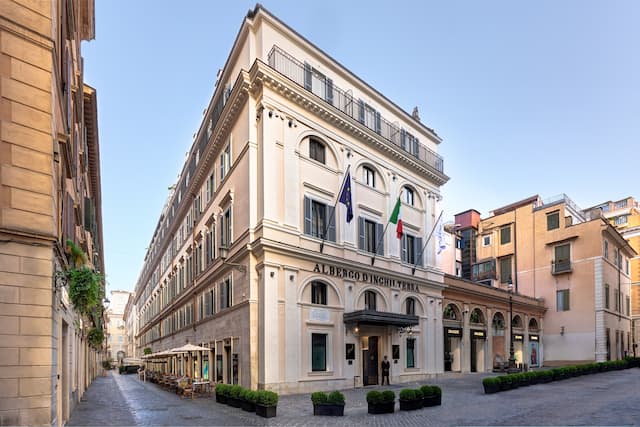
Hotel d'Inghilterra, an SLH Hotel
0.55 milesFrom*
838€
Honors Discount Advance Purchase
- 1 of 12
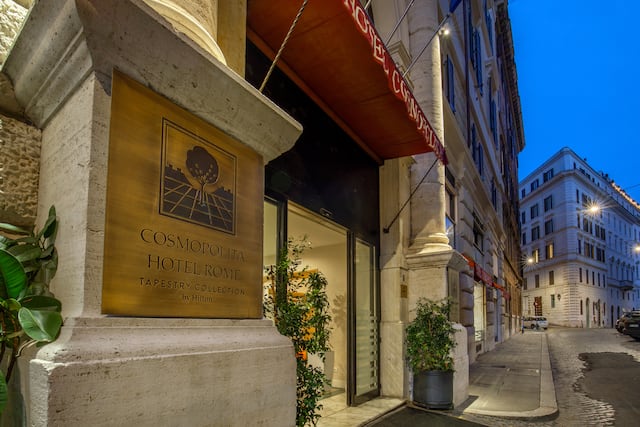
Cosmopolita Rome Colosseum, Tapestry Collection by Hilton
0.60 milesFrom*
263€
The Hilton Sale Honors
- 1 of 12
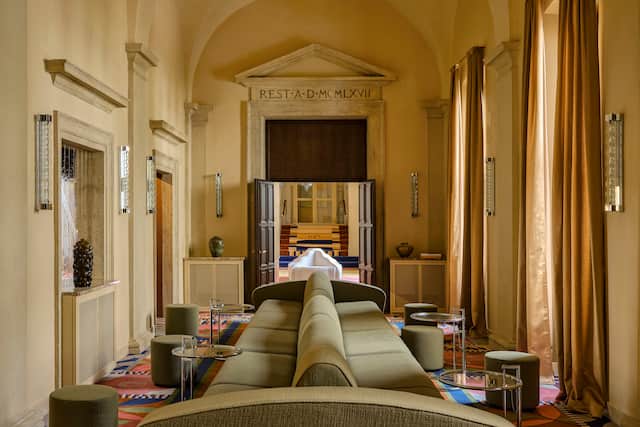
Palazzo Talia, an SLH Hotel
0.60 milesFrom*
953€
Honors Advance Purchase Breakfast Included
Indoor pool - 1 of 9
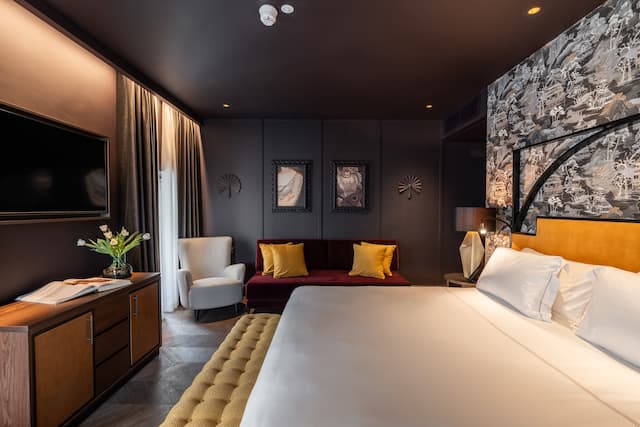
The Goethe Hotel, an SLH hotel
0.63 milesFrom*
540€
Honors Advance Purchase Breakfast Included
- 1 of 12

ROMEO Roma, an SLH Hotel
0.70 milesFrom*
1,862€
Honors Discount Breakfast Included
Outdoor pool - 1 of 9

Margutta 19, an SLH Hotel
0.74 milesFrom*
770€
Honors Advance Purchase Breakfast Included
- 1 of 10

Babuino 181, an SLH Hotel
0.74 milesFrom*
397€
Honors Advance Purchase Breakfast Included
- 1 of 11

Villa Spalletti Trivelli, an SLH Hotel
0.80 milesFrom*
869€
Includes fees
Honors Discount Breakfast Included
Free parking - 1 of 12
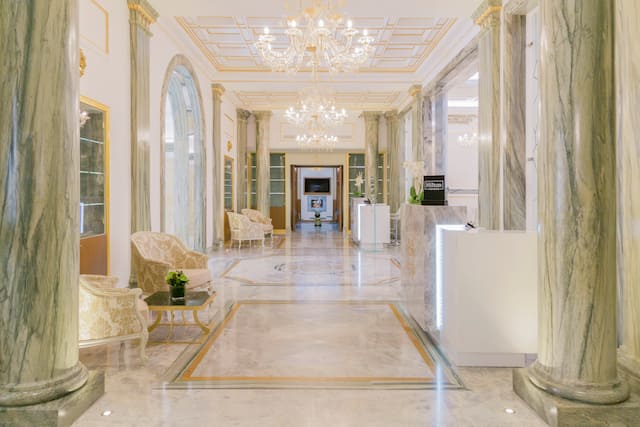
Aleph Rome Hotel, Curio Collection by Hilton
0.98 milesFrom*
572€
The Hilton Sale Honors
Indoor poolOutdoor pool


Why does Piazza Navona have an oval shape?
Piazza Navona's oval shape comes from the site it was built on - the ancient Roman Stadium of Domitian, which dates back to the 1st century AD. The stadium held athletic games and other public events with a capacity of about 20,000 people.
While the site was repurposed into a public square in the 15th century, the original elongated, curved shape of the stadium was preserved as architects built over its foundations instead of demolishing them. Remnants of the stadium still exist and are visible beneath the square and surrounding buildings.
Over the centuries, Piazza Navona evolved from a place of sports to a center of art, architecture, and public life with its unique shape providing a tangible link between ancient Rome and the Baroque city that flourished from it, making it one of the most historically layered squares in Italy's capital.
Which fountains are found in Piazza Navona?
Piazza Navona boasts three beautiful fountains, each adding to the square's distinct character. The most well-known is the Fountain of Four Rivers (Fontana dei Quattro Fiumi) designed by Gian Lorenzo Bernini and completed in 1651, which graces the center of the piazza.
It depicts the four rivers, the Nile, Danube, Ganges, and Rio de la Plata, as a representation of the four continents where Christianity had spread at that time. The southern part of Piazza Navona is where the Fontana del Moro stands, which was initially designed by Giacomo della Porta and then altered by Bernini, who added the figure of the Moor to its dynamic nautical scene featuring tritons, dolphins, and a large conch shell.
The northern part of the piazza has the Fontana del Nettuno, which was originally started by della Porta but remained unfinished for nearly 300 years, until 1878. Its marble and bronze structure symbolizes the power of the Pope who ruled the world like Neptune ruled the seas.
Are street artists common in Piazza Navona?
Yes, street artists are an ever-present and cherished part of Piazza Navona. Drawn by the square's lively atmosphere, artists regularly set up easels to paint portraits, caricatures, or landscapes while musicians, mimes, and street performers entertain passersby.
This tradition of unique interaction with art and culture has persisted for decades, adding a dynamic, local flavor to the historic setting. Street artists will almost always be found on the edges of the square, mostly surrounding the fountains and shaded walkways.
Their works can vary from quick sketches to detailed oil paintings, with many visitors choosing to take home a custom piece as a souvenir. The presence of these artists acts as a bridge between the square's historic and social significance, making them a vital part of the experience.
What events take place in Piazza Navona during winter?
Piazza Navona plays host to a variety of public events, celebrations and cultural activities throughout the year. One of the best known is the Christmas Market, which fills the square with festive spirit and attracts locals and visitors alike to its stalls, lights, sweets, and traditional carousel. In the summertime, the piazza welcomes outdoor performances, concerts, and exhibitions.
Occasionally, local artists and cultural institutions organise art fairs or heritage days to showcase and celebrate Rome’s creative community. Piazza Navona also serves as a setting for historical reenactments, parades, and related events during civic anniversaries or religious holidays.
While not all events are scheduled year-round, the square remains an active part of Rome’s social fabric. Regardless of whether you're visiting in summer or winter, Piazza Navona is likely to offer something to experience beyond its beautiful architecture.
Is Piazza Navona pedestrian-only?
Yes, Piazza Navona is a pedestrian-only space, which makes it particularly pleasant to explore on foot. While service and emergency vehicles can access the square when necessary, regular car traffic is not allowed.
This helps to preserve its historic elements and ambience, while allowing for a fluid exploration experience where visitors can stroll freely and enjoy the fountains, cafés, and artwork at their own pace. The surrounding streets are also mostly pedestrian-friendly, with some access for local traffic and deliveries.
Piazza Navona's pedestrian status creates a relaxed, open-air space that remains a popular destination for leisurely walks, outdoor dining, and street performances.
*Prices are based on current availability over the next 30 days and are subject to change. Please enter exact dates for specific pricing and availability.