Hotels near Rijksmuseum, Amsterdam, Netherlands
Showing 7 hotels
Prices include all taxes and fees
- 1 of 8
 0.43 miles
Coming Soon
We're accepting reservations for November 30, 2026 and beyond.
- 1 of 12
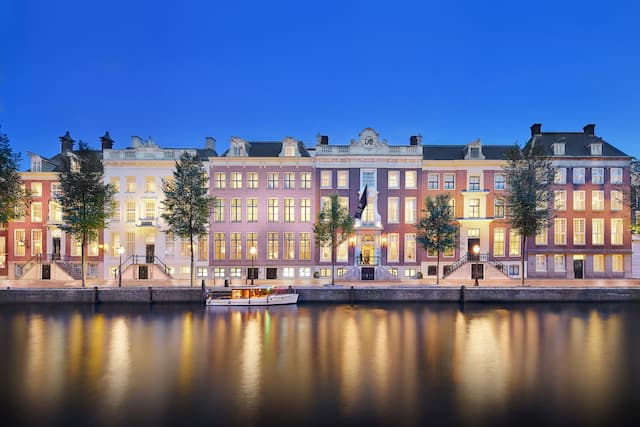 0.58 miles
From*
964€
Honors Discount Semi-flex
Indoor pool - 1 of 12
 0.92 miles
From*
1,125€
Honors Discount Advance Purchase
- 1 of 9
 1.13 miles
From*
462€
Honors Discount
- 1 of 11
 1.43 miles
From*
238€
Honors Discount Advance Purchase
- 1 of 7
 1.48 miles
From*
458€
Honors Discount Advance Purchase
- 1 of 12
 2.23 miles
From*
156€
Honors Discount Advance Purchase
Free breakfast


Why is the Rijksmuseum considered the national museum of the Netherlands?
Founded by the state to collect, preserve and showcase the core artistic and historical treasures of the Dutch nation, the Rijksmuseum is the national museum of the Netherlands. Located in the Museumplein in central Amsterdam, it officially opened in 1885 and now houses the largest and most important collection of Dutch art and history that spans over 800 years, making it a source of national pride.
Ranging from medieval sculptures and Golden Age paintings to 20th-century design pieces, its diverse exhibits not only draw visitors from around the world but also serve as a vital resource for researchers and scholars alike.
The Rijksmuseum does not simply serve as a space to display masterpieces, it plays an important role in education and preservation of national heritage through arts and culture by telling a compelling story about the Dutch identity.
Which masterpieces are housed in the Rijksmuseum?
The Rijksmuseum features numerous masterpieces, particularly from the Dutch Golden Age, often regarded as one of the most impactful and significant periods in Dutch art history. Rembrandt’s “The Night Watch,” a large and dynamic group portrait, along with Johannes Vermeer’s “The Milkmaid” and “Woman Reading a Letter”, are among the most notable works, drawing significant attention for their details and depiction of light.
Other famous artists whose works are on display at the museum include Frans Hals, Jan Steen, and Jacob van Ruisdael. Important non-Dutch works and decorative arts, including Delftware, antique furniture, and Asian artifacts, are also part of the permanent collection.
The galleries are masterfully organized to showcase the evolution and accomplishments of Dutch painting and craftsmanship, making it a preferred destination for art enthusiasts from around the world.
How did the Rijksmuseum’s building design reflect Dutch history?
The Rijksmuseum's design has evolved significantly since its inception. Originally designed by Dutch architect Pierre Cuypers, it incorporated Gothic and Renaissance architecture, which conveyed the feeling of national pride and European grandeur.
Since it opened its doors in 1885, the Rijksmuseum underwent multiple renovations aimed at adapting the museum to both the growing collections and contemporary needs. The most significant transformation took place from 2003 to 2013, when, as part of a major restoration effort, Spanish architects Cruz y Ortiz reconfigured the overall layout to improve accessibility, prioritized natural lighting, and restored Cuypers’ original central passage.
Their reconstruction ultimately created a more fluid visitor experience while highlighting the building’s historic character. Today, the Rijksmuseum stands as an epitome of balance between tradition and modernity.
Are there special exhibits at the Rijksmuseum throughout the year?
The Rijksmuseum hosts a variety of special exhibits throughout the year, focusing on individual artists, historical art movements or themed periods that finely complement its permanent collection. Past special exhibits have focused on artists such as Rembrandt, Vermeer, and Caravaggio, in addition to presenting the history of the Dutch East India Company and decorative arts.
These exhibits are often accompanied by multimedia installations, guided tours, and educational materials to complete the experience and ensure optimal engagement. By working with institutions from other parts of the world, the Rijksmuseum brings rare objects to Amsterdam and provides museum-goers with a fresh perspective on classic works and new content to explore.
Advance booking may be required to attend some of the temporary exhibitions, especially for high-demand displays and during peak periods.
Can visitors explore the Rijksmuseum gardens?
Yes, the gardens of the Rijksmuseum are open to the public and visitors are allowed to explore them free of charge. Located on the museum grounds, they are meant to serve as an extension of the museum experience by creating a seamless flow between art, history, and nature.
This effect is further achieved by regularly showcasing sculptures from the museum’s collection, art installations, or temporary exhibitions alongside the gardens' decorative hedges, seasonal flower displays and picturesque lawns. People can enjoy a leisurely stroll, relax on the benches, or admire nature-framed views of the museum’s grand façade.
While accessible year-round, the gardens are most inviting during spring and summer. Regardless of whether you’re visiting the museum or simply passing by, the gardens offer a tranquil space to take a scenic break in the heart of Amsterdam.
*Prices are based on current availability over the next 30 days and are subject to change. Please enter exact dates for specific pricing and availability.