Hotels in Warsaw, Poland
Showing 8 hotels
Prices include all taxes and fees
- 1 of 12
 1.52 miles
Coming Soon
We're accepting reservations for June 1, 2027 and beyond.
- 1 of 12
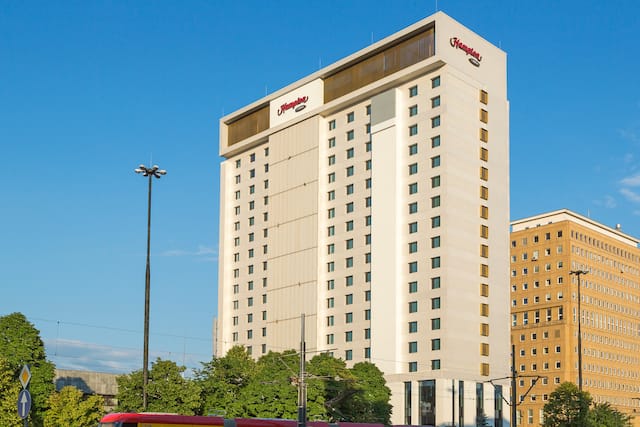 1.53 miles
From*
326zł
Honors Discount Semi-flex
Free breakfast - 1 of 12
 1.56 miles
From*
417zł
Honors Discount Semi-flex
Indoor pool - 1 of 12
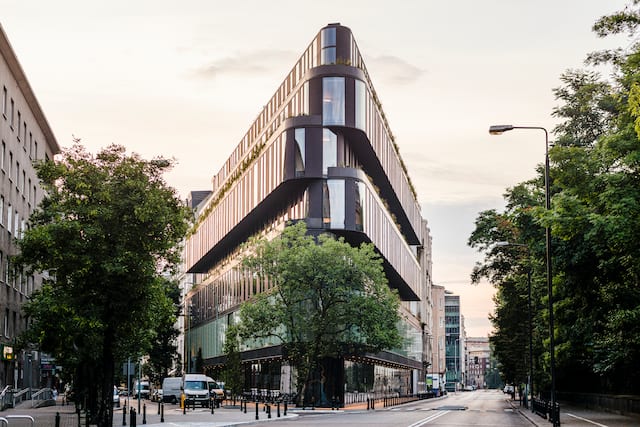 1.62 miles
From*
740zł
Honors Discount Advance Purchase
- 1 of 12
 3.74 miles
From*
275zł
Honors Discount Advance Purchase
Free breakfast - 1 of 12
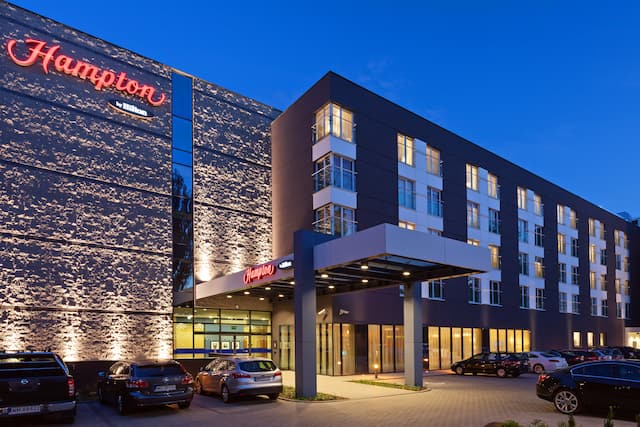 4.89 miles
From*
387zł
Honors Discount Advance Purchase
Free breakfast - 1 of 12
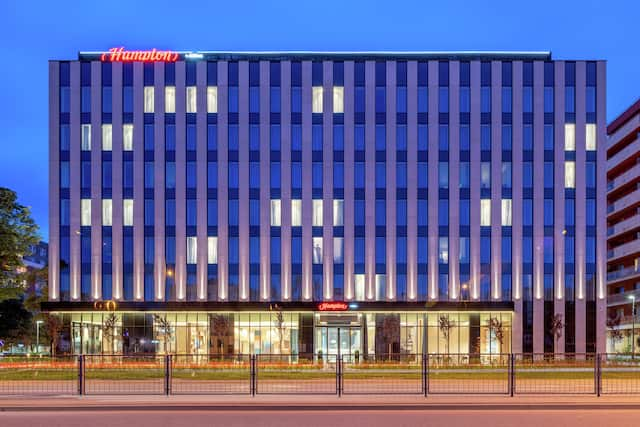 4.93 miles
From*
287zł
Honors Discount Advance Purchase
Free breakfast - 1 of 12
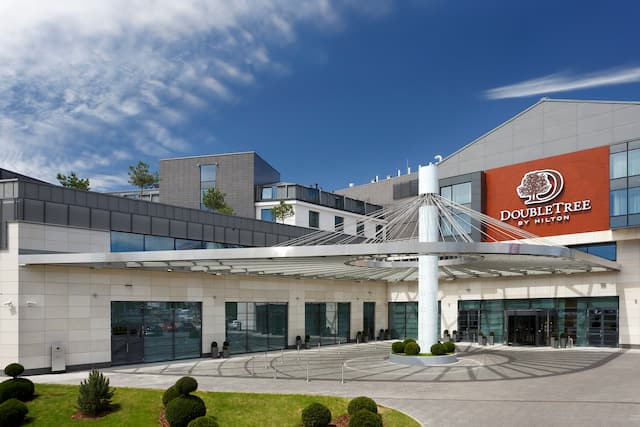 6.76 miles
From*
314zł
Honors Discount Advance Purchase
Indoor pool


How was Warsaw’s Old Town rebuilt after the Second World War?
Almost everything in Warsaw's Old Town is a post-war reconstruction. The district was largely destroyed in 1944, and in the years that followed it was rebuilt using old paintings, photographs and surviving architectural plans as guides. Eighteenth-century cityscapes by the painter Bernardo Bellotto proved especially useful in recreating accurate façades.
The townhouses around the Market Square, the medieval city walls and the Royal Castle were all reconstructed to match earlier periods, with work on the castle continuing into the 1980s. UNESCO added the Old Town to its World Heritage list in 1980, citing the scale and accuracy of the reconstruction rather than the age of the buildings.
The square at its centre holds a bronze mermaid statue, the symbol of the city, while the surrounding arcades now house cafés and small museums. From the rebuilt ramparts there are views over the Vistula. The area is compact, so it is easily covered on foot.
Which palaces and gardens show Warsaw’s royal history?
Three sites give the clearest picture of royal Warsaw. The Royal Castle, on the edge of the Old Town, served as the seat of monarchs and parliament, and its reconstructed state rooms and art collection are open to visitors.
South of the centre, Wilanów Palace dates from the late seventeenth century and is set in formal baroque gardens; the interiors and parkland are open year-round, and the grounds suit a long walk in any season. Łazienki Park is the city's largest at around 76 hectares, laid out in the eighteenth century around the Palace on the Isle, which sits on an artificial lake.
The park is home to free-roaming peacocks, and open-air piano recitals are held there on summer Sundays beside a monument to the composer Chopin.
What’s the Vistula riverfront like in Warsaw?
The Vistula divides Warsaw, and the western bank has been redeveloped into a long run of boulevards busy through the warmer months. You can walk or cycle for several kilometres past terraces, cafés and viewpoints facing the skyline, with food stalls and street performers on summer evenings.
The Copernicus Science Centre sits on this side, a hands-on museum suited to families, with a rooftop garden overlooking the river. The eastern bank is kept deliberately undeveloped, with sandy beaches and woodland that remain unusually natural for a capital and form part of a protected Natura 2000 nature site.
River boats cross and run along the water in summer, giving a different angle on the city and an easy way to rest. Several bridges link the two banks, the oldest dating from the nineteenth century, and the contrast between the developed western shore and the wild eastern one is one of the riverfront's defining features.
Which museums cover Warsaw’s twentieth-century history?
Two museums stand out for understanding modern Warsaw. The POLIN Museum traces a thousand years of cultural history in Poland through detailed multimedia galleries, housed in a glass building completed in 2013 that has itself won architectural awards. The Warsaw Rising Museum, opened in 2004, documents the 1944 uprising through personal accounts, film, photographs and reconstructed settings, including a full-scale replica of a sewer used during the fighting.
Both are extensively presented and can be emotionally demanding, so a half-day for each is sensible. With more time, the National Museum holds a broad collection of Polish painting spanning several centuries, and smaller venues cover the city's design and everyday history.
Audio guides and English-language exhibits make all of them accessible to international visitors. The two main museums sit in different parts of the city, so it is worth planning routes in advance; trams and the metro reach both directly from the centre.
What is there to do in Warsaw through the different seasons?
Warsaw shifts in character across the year. Summer is the most active stretch, with riverside terraces open late, outdoor concerts in the parks and free Chopin piano recitals at Łazienki on Sundays. Autumn turns the city's gardens gold and russet, and the cooler, clearer days suit museum visits and long walks.
Winter brings cold and frequent snow, along with festive markets near the Old Town, lights strung along the main avenues and outdoor skating rinks set up in several squares. Daytime temperatures can fall below freezing from December to February.
Spring is milder and quieter, a good window to see the parks come back into leaf before the summer crowds. Each season has its own draws, so the city repays a visit at any point in the calendar, though those preferring fewer crowds tend to favour spring and autumn over the busier summer months.
*Prices are based on current availability over the next 30 days and are subject to change. Please enter exact dates for specific pricing and availability.