Hotels in Cairo, Egypt
Showing 7 hotels
- 1 of 12
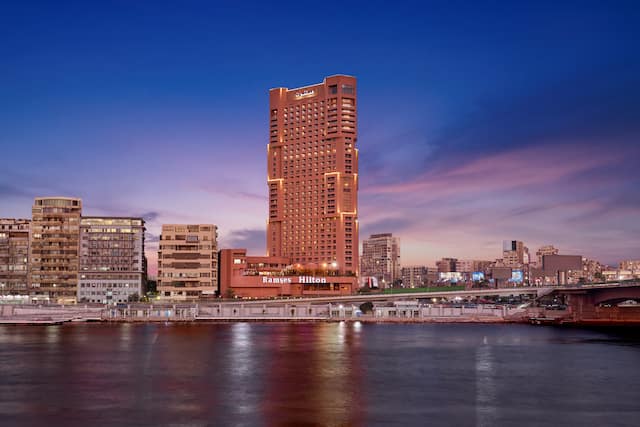 0.71 miles
From*
$162
Honors Discount Advance Purchase
Outdoor pool - 1 of 12
 1.17 miles
From*
$180
Honors Discount Semi-flex
Outdoor pool - 1 of 12
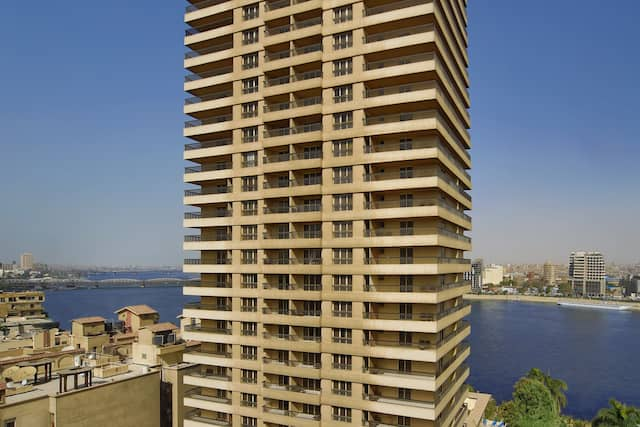 1.94 miles
From*
$172
Honors Discount Advance Purchase
Outdoor pool - 1 of 12
 4.13 miles
From*
$202
Honors Discount Advance Purchase
Outdoor pool - 1 of 12
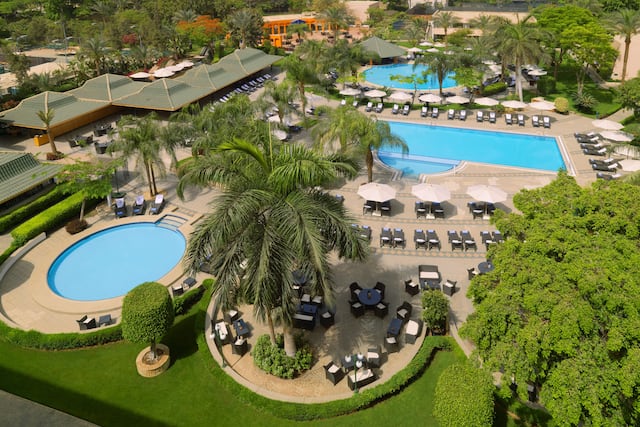 8.47 miles
From*
$139
Honors Discount Advance Purchase
Outdoor pool - 1 of 13
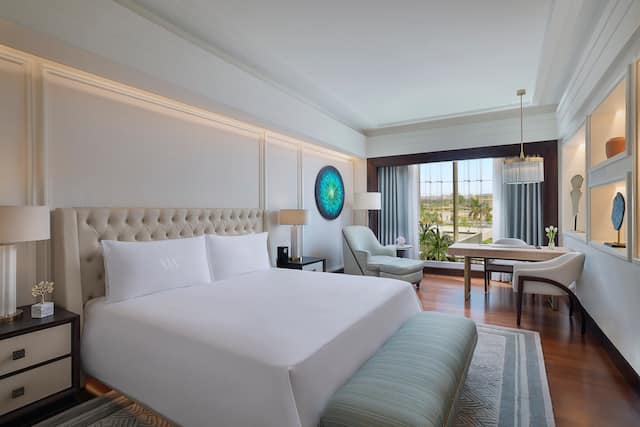 8.57 miles
From*
$221
Honors Discount
Outdoor pool - 1 of 12
 13.06 miles
From*
$116
Honors Discount Semi-flex
Outdoor pool


Why do the Pyramids of Giza continue to fascinate visitors from around the world?
The Pyramids of Giza have drawn travellers for thousands of years. The Great Pyramid, built around 2560 BC for the pharaoh Khufu, stood about 146 metres tall on completion and was the tallest structure on earth for some 3,800 years. It is the only surviving structure of the seven wonders of the ancient world.
Much of the interest lies in the engineering: an estimated 2.3 million stone blocks, some weighing several tonnes, were raised with considerable precision long before modern machinery existed. Alongside the three main pyramids stands the Sphinx, carved from a single limestone outcrop and measuring around 73 metres long.
Questions remain about the exact construction methods, and excavations nearby continue to uncover tombs, workers' settlements and artefacts. The complex sits on the western edge of Cairo and receives several million visitors a year, who can walk among the structures and, in some cases, enter the interior passages.
What can you see at Cairo’s Egyptian Museum and the Grand Egyptian Museum?
Cairo holds two major museums of ancient Egypt. The original Egyptian Museum on Tahrir Square, opened in 1902, occupies a grand building filled with statues, mummies, jewellery and everyday objects displayed in a dense, traditional style, with more than 120,000 items in its collection.
Out near the pyramids, the Grand Egyptian Museum is a very large archaeological museum set across naturally lit galleries on a site of around 50 hectares.
Its headline display is the complete set of treasures from Tutankhamun's tomb, including the gold funerary mask, shown together for the first time after the artefacts were moved from the older museum. A statue of Ramesses II, standing some 11 metres tall, greets visitors in the atrium, and tall windows frame the pyramids in the distance.
Which streets capture the character of Cairo’s historic Islamic Quarter?
Cairo's historic quarter is a network of medieval streets best explored on foot. The Khan el-Khalili bazaar is its commercial centre, established in the fourteenth century, with narrow lanes of workshops and stalls selling metal lamps, spices, textiles, copperware and souvenirs, and old coffee houses set between them.
Running through the district is Al-Muizz Street, one of the city's oldest thoroughfares, lined with ornamented stone façades, carved wooden mashrabiya screens and slender minarets that together form an open-air display of historic architecture spanning several centuries. The street has been pedestrianised along much of its length and is illuminated in the evenings.
Climbing a tower or rooftop terrace gives a view across the skyline of domes and minarets. The area forms part of Historic Cairo, inscribed as a UNESCO World Heritage Site in 1979, and it is busy and densely built, so it rewards taking time over.
How does the Nile shape life and sightseeing in Cairo?
The Nile runs through the centre of Cairo and shapes how the city is laid out. Riverside walks line both banks, and the bridges linking them are popular places to pause for the view. Boats of many kinds use the water, from small traditional feluccas with triangular sails to larger cruisers serving meals on board.
The islands of Zamalek and Roda sit midstream and are greener and quieter than the surrounding districts; Zamalek in particular holds embassies, galleries and tree-lined streets, while Roda is home to the Nilometer, a medieval structure once used to measure the river's level.
The riverside promenades on both islands suit an unhurried walk. Several bridges connect the islands to either bank, and ferries also cross at points.
When should visitors plan a trip to Cairo for outdoor sightseeing?
For comfortable days at the pyramids and around the old streets, the stretch from October to April is the most pleasant. Daytime temperatures then generally sit between 18 and 25 degrees, evenings turn mild and the midday heat eases, which matters when walking open sites with little shade.
Spring, around March and April, can bring the khamsin, a hot, dusty wind that occasionally reduces visibility. Summer, roughly June to August, gets very hot, with daytime highs often above 38 degrees, so visitors who come then tend to set out early and rest through the afternoon.
Rain is rare at any time of year, with Cairo receiving only a few millimetres annually. A hat, sunscreen and plenty of water are sensible at the more exposed attractions, where shade is limited. The winter months also bring shorter queues at the major sites, making them the more practical choice for combining several outdoor visits in one trip.
*Prices are based on current availability over the next 30 days and are subject to change. Please enter exact dates for specific pricing and availability.