Hotels in Samarkand, Uzbekistan
Showing 4 hotels
- 1 of 3
 1.37 miles
From*
¤1,300,075 UZS
Honors Discount Advance Purchase
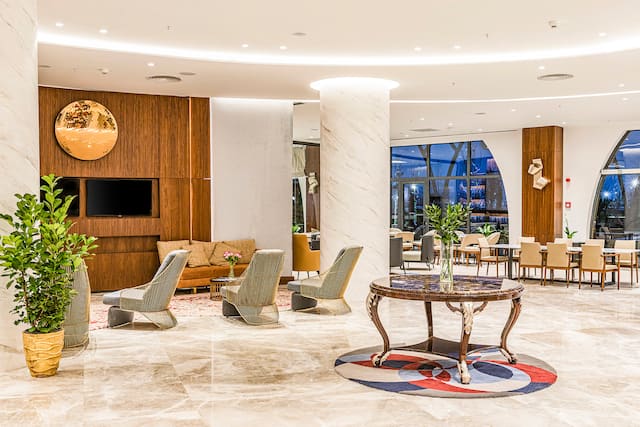
Free parkingIndoor pool - 1 of 12
 4.24 miles
From*
¤1,227,400 UZS
Honors Discount Advance Purchase
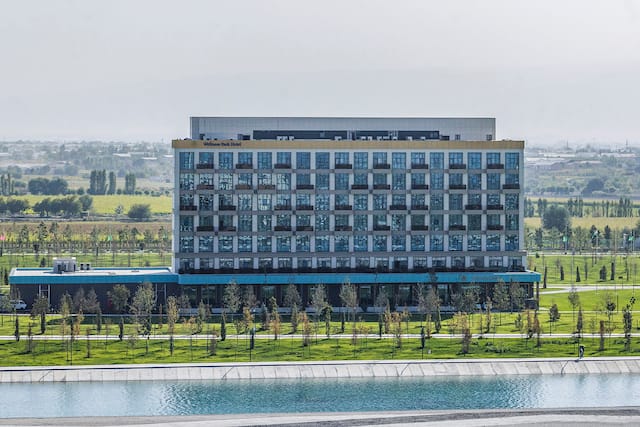
Free parking - 1 of 12
 4.33 miles
From*
¤1,227,400 UZS
Honors Discount Advance Purchase
Free parking - 1 of 12
 4.46 miles
From*
¤1,954,380 UZS
Honors Discount Advance Purchase
Free parkingIndoor poolOutdoor pool




Why is Samarkand often called a jewel of the Silk Road?
Samarkand stood at the crossroads of the trade routes between China and the Mediterranean, and centuries of passing caravans made it one of the wealthiest cities of its age. That wealth funded the architecture it is known for today: turquoise-tiled domes, tall gateways and intricate geometric patterns worked into glazed brick.
Under the ruler Timur in the late fourteenth century, the city became a centre of learning and craft, drawing scholars and artisans from across the region, and his grandson Ulugh Beg later built an observatory here whose foundations survive.
Much of that period's architecture still stands, carefully restored, and the historic centre was inscribed as a UNESCO World Heritage Site in 2001.
What is the story behind the Registan in Samarkand?
The Registan is the central architectural ensemble of Samarkand and one of the principal monuments of central Asia. Three large buildings, constructed as madrasahs, or historic colleges, frame a public square on three sides, each fronted by a tall arched portal covered in coloured tilework.
The oldest, the Ulugh Beg Madrasah, dates from the early fifteenth century; the other two were built roughly two centuries later, and one is decorated with stylised tiger mosaics above its entrance, an unusual motif for the region's architecture.
The word Registan means 'sandy place', and the square once served as the civic heart of the city, used for gatherings and ceremonies.
Which other architectural landmarks attract visitors to Samarkand?
Beyond the Registan, several other monuments draw visitors. The Bibi-Khanym, built in the early fifteenth century, was a vast structure for its era and still impresses through its scale despite centuries of earthquake damage and partial collapse.
Shah-i-Zinda is a narrow avenue of mausoleums climbing a gentle slope, its tilework, in deep blues and greens, intricately detailed and dating across several centuries. The Gur-e-Amir, with its ribbed turquoise dome, is the mausoleum of Timur and notable for its proportions; its design is thought to have influenced later buildings as far away as Mughal India, including the Taj Mahal.
All three lie close enough to the centre to combine into an unhurried day on foot, and each has undergone restoration that allows visitors to see the interiors and tiled façades much as they would originally have appeared.
Where can visitors experience Samarkand’s ancient heritage today?
Samarkand's heritage extends beyond the monuments into daily life. The Siyob Bazaar, near the Bibi-Khanym, is a practical place to see it, with stalls of dried fruit, nuts, spices and the round flatbread the city is known for, traditionally stamped with a patterned seal before baking.
Around the historic sites, workshops keep older crafts in production, from hand-loomed silk and carpet weaving to painted ceramics and papermaking, the last using a mulberry-bark technique revived in the nearby village of Konigil; many welcome visitors to watch.
Tree-lined boulevards and tidy parks connect the landmarks, with teahouses where you can pause over a pot of green tea.
When is the best time to visit Samarkand?
Spring and autumn are the most comfortable seasons in Samarkand. From April to early June the weather is mild, gardens come into bloom and the long daylight hours suit walking between monuments without the summer heat, with daytime temperatures often around 20 to 25 degrees.
September and October bring warm, settled days, cooler evenings and the local fruit harvest at its peak, which shows in the markets, particularly the grapes, melons and pomegranates the region grows.
Summer can be very hot and dry, with July and August temperatures regularly exceeding 35 degrees, so sightseeing is easier early or late in the day. Winters are cold and quiet, occasionally with snow on the tiled domes, and daytime temperatures can hover near freezing, which makes long walks outdoors less appealing.
*Prices are based on current availability over the next 30 days and are subject to change. Please enter exact dates for specific pricing and availability.