Hotels near Musee d'Orsay, Paris, France
Showing 5 hotels
Prices include all taxes and fees
- 1 of 12
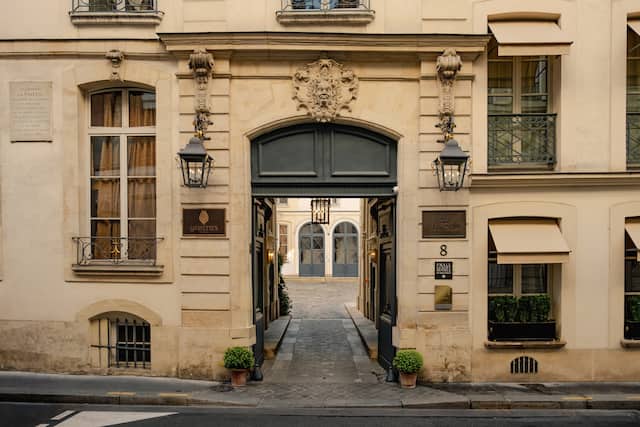
Grand Hotel du Palais Royal, an SLH Hotel
0.61 miles - 1 of 12
Le Narcisse Blanc Hotel & Spa, an SLH Hotel
0.73 milesIndoor pool - 1 of 10
Marquis Faubourg Saint Honore, an SLH Hotel
0.73 miles - 1 of 12
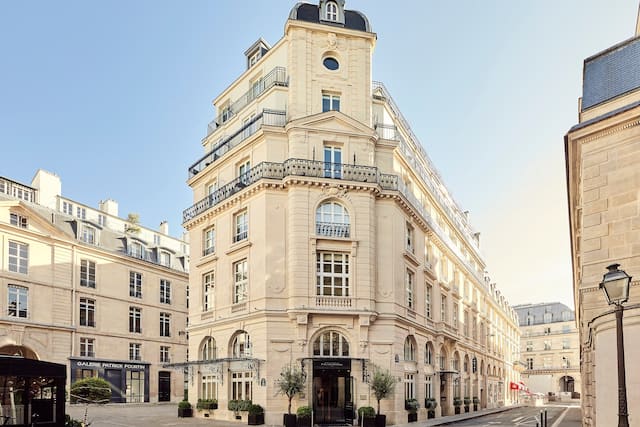
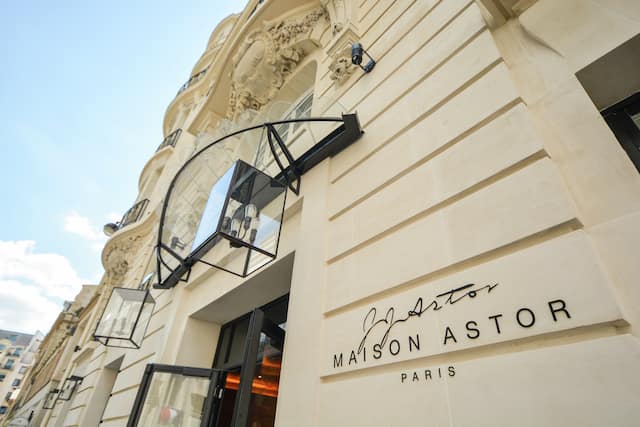
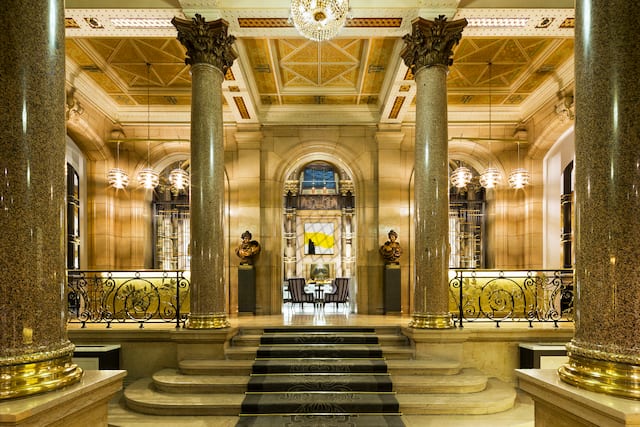
Maison Astor Paris, Curio Collection by Hilton
0.95 miles - 1 of 12
Hilton Paris Opera
1.08 miles








Why was the Musée d’Orsay originally built as a railway station?
Constructed for the 1900 Exposition Universelle (World’s Fair) in Paris, the Musée d’Orsay was originally built as a railway station with the purpose of offering a central terminal just steps from the Seine and the Louvre that connected the southwestern regions of France to the capital. Architect Victor Laloux designed the building in the Beaux-Arts style, blending a modern metal construction with classical decorative elements.
At the time, it was a technical marvel, featuring electric trains, elevators, and an impressive glass roof. Passenger service stopped in 1939 as its platforms had become too short for longer, modern trains, and the station fell into partial disuse.
Its transformation into a museum in the 1980s preserved the original architecture while the interior was repurposed to house 19th- and early 20th-century art. The station’s historical significance and its unique design now serve as a dramatic backdrop for one of Paris’s most visited cultural landmarks.
Which famous artists are featured in the Musée d’Orsay?
The Musée d'Orsay is well-known for its vast collection of 19th- and early 20th-century pieces, which provides a focused look at the evolution of modern art through the works of many renowned artists. You will find paintings by Claude Monet, famous for his unique approach to representing light and nature; Edgar Degas, often associated with scenes of ballet, where movement is more important than shape and form; many of Vincent van Gogh's works that include masterpieces such as Starry Night Over the Rhône and Bedroom in Arles.
Other famous artists include Édouard Manet, Pierre-Auguste Renoir, Paul Cézanne, Henri Toulouse-Lautrec, and many more.
Spanning Impressionism, Post-Impressionism, and Symbolism, the museum's collection offers a comprehensive glimpse into the most important transitions in European art in the 19th century.
Does the Musée d’Orsay have a clock visitors can stand behind?
Yes, one of the Musée d’Orsay’s most popular highlights is its large clock, positioned on the upper level at the rear of the building. Standing right behind its enormous glass clock face offers a framed view of the Seine and the city of Paris beyond.
Originally part of the building’s function as a train station, the clock was retained during the museum’s transformation and today, it serves as both a historical feature and a common spot for photos. The design allows natural light to enter the gallery while giving visitors a unique visual perspective.
It is especially popular with photographers, providing a distinctive backdrop for capturing the cityscape from a quiet, elevated vantage point.
How did the Musée d’Orsay become a museum?
The Musée d’Orsay was transformed into a museum through a government project that took place in the latter part of the 20th century. When the Gare d’Orsay train station ceased operation, the French government saw it as an opportunity to alleviate a void in Paris’s existing art institutions by reimagining the space and establishing it as a permanent venue to showcase art from 1848 until 1914.
Architect Gae Aulenti was tasked with designing the transformation, which maintained much of the original building's layout and architecture, while adapting it for museum use. The building improvements included introducing new galleries, lighting systems, and environmental control systems to preserve the valuable artworks.
The museum opened to the public in 1986, with its unique combination of industrial ambience and cultural purpose making it one of the city's most popular museums ever since.
Are there rooftop views from the Musée d’Orsay?
Yes, there are a number of elevated viewing points at the Musée d'Orsay that offer scenic skyline views. Although this museum does not have a rooftop terrace, many of the upper level spaces provide a panoramic look over the Seine, the Louvre, and the Paris cityscape.
The most well-known spot is behind the large glass clock on the 5th floor, where visitors can look out over the city through its translucent clock face. Some windows in the galleries on the upper levels provide similar views.
These vantage points are accessible to general ticket holders and do not require special access. Taking some time to stop, look out over the city, and experience the flow of art, architecture, and Paris' skyline from above, gives a unique perspective and another exciting layer to the overall museum experience.
*Prices are based on current availability over the next 30 days and are subject to change. Please enter exact dates for specific pricing and availability.